


Frequently Asked Questions (FAQ) About PDO Barbed Sutures
Home » Blog » HAVE YOU BEEN FOLLOWING THE GUIDANCE DOCUMENTS? »
As PDO barbed sutures become increasingly popular in aesthetic, dental, and surgical fields, healthcare professionals and patients alike often seek clear answers to common questions. In this FAQ, we address the most frequently asked topics about these innovative sutures.
1. What are PDO barbed sutures made of?
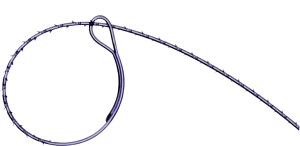
PDO (Polydioxanone) is a biocompatible, synthetic, absorbable polymer. Barbed versions of PDO sutures have microscopic barbs along their length that anchor the tissue without the need for knots.
2. How long do PDO barbed sutures last in the body?
PDO sutures retain strength for 4–6 weeks and are fully absorbed within 6–8 months (180–240 days), depending on tissue type and patient metabolism.
3. Are PDO barbed sutures safe?
Yes. They are:
- CE-certified and MDR-compliant
- Designed for minimally invasive procedures
- Proven to reduce operation time and improve outcomes when used correctly
- What procedures commonly use PDO barbed sutures?
They are used in:
- Dental and oral surgery (for faster closure and no knot bulking)
- Gynecology (vaginal wall suspension)
- General surgery (subcutaneous closures)
5. What’s the difference between barbed and regular sutures?
| Feature | Traditional Sutures | Barbed Sutures |
|---|---|---|
| Closure method | Requires knots | Self-anchoring, knotless |
| Time to close | Longer | Faster |
| Tension distribution | Uneven | Evenly spread via barbs |
| Patient comfort | May feel knots | Smoother post-op comfort |
6. Are PDO barbed sutures painful to remove?
No removal is necessary. They naturally degrade and absorb in the body. This is especially helpful in oral or subcutaneous applications where suture removal can be uncomfortable or risky.
7. Do the barbs damage tissue?
When applied correctly, the barbs minimize trauma by eliminating the need for knots and evenly distributing tension. Proper technique is essential to avoid tissue stress.
8. Can PDO barbed sutures be used in infected or high-tension areas?
Caution is advised. In infected wounds or high-tension closures, surgeons should evaluate alternative sutures or techniques. In such cases, non-absorbable options or reinforcement may be more suitable.
9. Can barbed sutures be adjusted once placed?
No. Once tension is applied and the barbs engage, backtracking is not advised. Surgical planning should ensure correct placement from the beginning.
Final Note
PDO barbed sutures represent a major advancement in surgical closure, offering efficiency, precision, and better healing. If you have more questions or want to explore Katsan’s CE-certified range, contact us directly or visit our website and product catalog.


Frequently Asked Questions (FAQ) About PDO Barbed Sutures
As PDO barbed sutures become increasingly popular in aesthetic, dental, and surgical fields, healthc
Best Practices for Using PDO Barbed Sutures
PDO barbed sutures are transforming surgical routines across specialties thanks to their knotless cl
Absorption Timeline and Tissue Interaction of PDO Barbed Sutures
One of the key advantages of PDO (Polydioxanone) barbed sutures lies in their predictable absorption